Michael Lewis
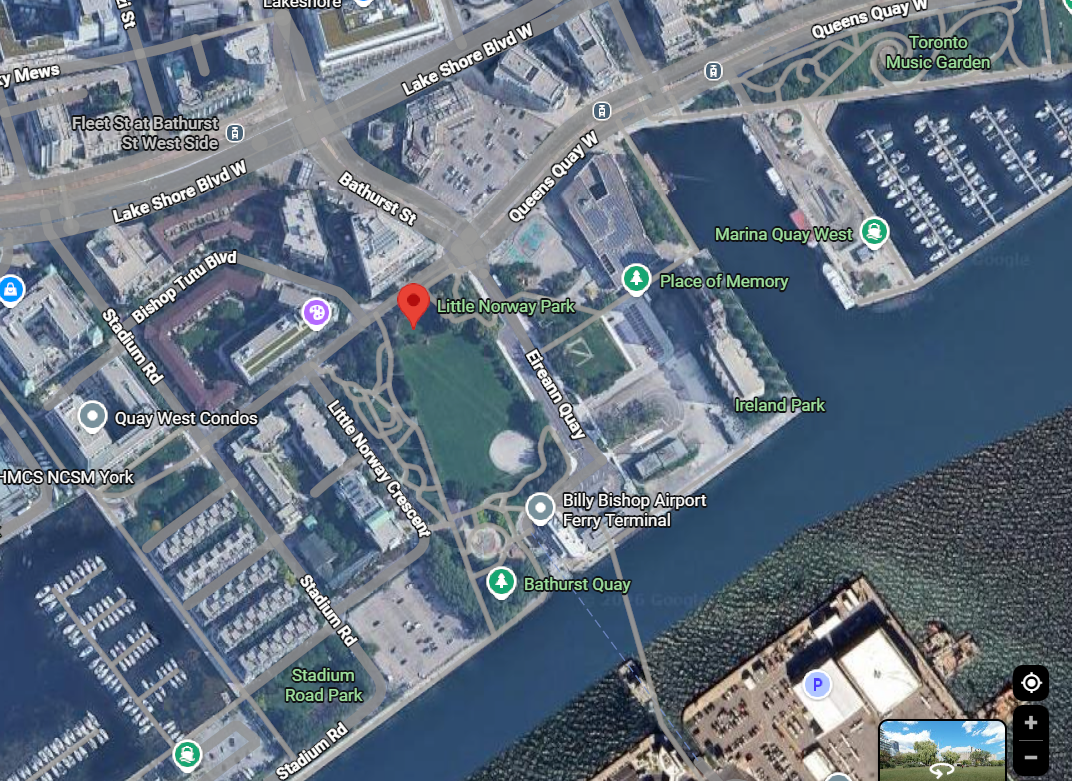
Toronto city council has approved Mayor Olivia Chow’s 14-point emergency motion calling on Ottawa to block the expropriation of city land, including one-third of the waterfront’s Little Norway Park, as part of the province’s plan to take over and expand Billy Bishop Airport.
The city adopted the motion with amendments during its council meeting on Thursday, the same day that the majority Progressive Conservative government tabled the Building Billy Bishop Airport Act.
Along with expropriating lands, the proposed provincial legislation would also usurp the city’s role in a tripartite airport governance agreement that currently includes the city, Ottawa and the Toronto Port Authority, a federal agency that owns most of the airport’s land (Toronto owns about 20 per cent.)
“Unilateral action without consulting Torontonians is not acceptable,” Chow said.
Ontario Transportation Minister Prabmeet Sarkaria said he intends to press forward despite the mayor’s objections, calling the airport a key and underutilized asset for the city and the province. Premier Doug Ford has said the project extending the airport’s two main runways to allow jet traffic would lead to greater consumer choice, lower prices, while creating jobs and easing congestion at Pearson International Airport.
Ford is also promising “whisper jets” that he says are quieter than the turboprop planes that currently fly out of Billy Bishop.
But council members including deputy mayor Ausma Malik, who seconded the mayor’s motion, said Ford has bypassed public consultation on a plan that removes desperately needed parkland, adds to traffic gridlock on the lakeshore and limits housing development.
“Torontonians have a right to have a say,” said Malik, whose Spadina-Fort York ward includes the expropriation area. “It’s their city, their waterfront.”
The province’s bill says the city is to receive fair market value for expropriated land, but the mayor’s motion said the value for “best and highest use should be the floor” for any compensation discussion.
The motion calls on Queen’s Park to reimburse the city for capital expenses adjusted to inflation related to Little Norway Park incurred over the last 40 years and to provide funding for replacement parkland. It asks the province to compensate anyone living within 500 metres of the expropriation area and to provide “equivalent homes at fair market value with an apology for the disruption to their community.”
The motion authorizes the city solicitor to explore legal options in response to the provincial legislation, to pursue legal action to protect the city’s interests and requests that the federal government “disallow this land grab from the province and to clarify their position on the land grab.”
Transport Canada spokesperson Hicham Ayoun said decisions about airport operations “will require the consensus of all signatories to the Tripartite Agreement. Such decisions will also involve robust consultations with key stakeholders, affected communities, and Indigenous groups, while taking into account economic benefits, transportation needs, and environmental considerations,” he said in an email.
Asked if City of Toronto consent would be required to approve the expansion, which would increase annual passenger volumes to ten million from two million, he said Ottawa “is committed to collaborating with all parties interested in supporting the airport’s future operations.”
Last month, Prime Minister Mark Carney called the province’s plan for Billy Bishop, a regional international airport on the Toronto Islands that provides short-haul services, “very interesting with big possibilities.”
Federal Transportation Minister Steven MacKinnon in late March said he’ll be working with the province “to design a path forward,” noting that there are safety issues to consider but also that Pearson airport is congested.
The Ford government earlier in March said it would declare Billy Bishop a Special Economic Zone to suspend provincial and municipal rules that would normally assess the project’s environmental and other impacts.
Bill 5, 2025 provincial legislation that created the Special Economic Zones Act, is facing legal challenges including a lawsuit from four environmental groups who in April took the Ontario government to court arguing the Act is unconstitutional.
Toronto-St. Paul’s Coun. Josh Matlow, whose motion directing staff to report back “on an urgent basis” with an impact assessment was approved at an earlier planning and housing committee meeting, said the city has a responsibility “to put facts on the table where the provincial government has not provided anything,” with the information to be shared with provincial and federal counterparts.
Matlow, in a letter to the committee, said “jets will require a significant reduction in the height and density of new housing projects in the area that could have a cascading effect on the affordable housing that could be part of those future redevelopments.”
He said airport expansion could mean only smaller buildings would be developed on the Port Lands where planners envision up to 25,000 new residences, adding that a study is needed to assess impacts of the waterfront’s quality of life.